A bisexual teen’s panicked lie about dating the girl her friends despise turns into a fake relationship neither of them expected to want to make real.
If you love hate-to-love-turned-fake-dating setups, grumpy x sunshine energy, and a YA rom-com that takes queerness, culture, and faith seriously, Hani and Ishu’s Guide to Fake Dating by Adiba Jaigirdar is worth a look.
Our take: this is a sweet, big-hearted YA romance that tackles biphobia, racism, and family pressure with real weight, even though the central relationship and its resolution move faster than the emotional groundwork can fully support.
✓ Love a fake-dating premise between two girls who start out as enemies
✓ Want grumpy x sunshine chemistry with sharp banter
✓ Appreciate YA that centers Bengali and Muslim identity alongside immigrant family dynamics
✓ Like a sweet, kissing-only romance with no on-page sexual content
✓ Enjoy stories about queer teens finding better friendships along the way
Avoid If
Skip this if you want…
A slow burn with lots of on-page romantic development (the central relationship resolves quickly in the final stretch)
No on-page biphobia or racism from peers (Hani’s friend group is a recurring source of both)
Adult characters and settings rather than a high-school-level story
Every subplot, including the head-girl election, fully wrapped up
Book Synopsis
Humaira “Hani” Khan is well-liked and easygoing, but when she comes out to her two best friends as bisexual, they dismiss her identity because she’s only ever dated boys. Panicked, Hani blurts out that she’s actually dating a girl, and lands on the one name guaranteed to make her friends recoil: Ishita “Ishu” Dey.
Ishu is Hani’s opposite in almost every way, an intensely focused overachiever aiming to become head girl to prove herself to her parents after her older sister’s choices left them disappointed. She agrees to go along with the ruse on one condition: Hani has to help her become more likeable to her classmates so she has a real shot at winning.
As the two Bengali girls play along in public, their fake arrangement starts turning into something neither of them planned on feeling. But between Hani’s toxic friend group and the pressure Ishu is under at home, staying together for real is more complicated than either of them expected.
My Review
Hani and Ishu’s Guide to Fake Dating leans hardest into its grumpy-sunshine dynamic, and it works: Hani’s eagerness to please plays well against Ishu’s clipped, no-nonsense energy from their very first fake-dating planning session.
Jaigirdar doesn’t shy away from the harder material either. Hani’s friends invalidate her bisexuality outright, and the racism and Islamophobia woven through her friend group feel specific and lived-in rather than added for shock value. Ishu’s storyline, caught between her parents’ expectations and her sister’s more complicated path, adds a second layer of pressure that never feels like filler.
Where the book struggles is pacing. Ishu’s decision to step back from the head-girl race arrives abruptly and gets little follow-up, and Hani’s reckoning with her friend group resolves in just a few pages after nearly the entire novel building toward it. The central romance suffers a bit for it too: readers spend more time in each girl’s internal monologue than in scenes of the two of them together.
Even so, the sweetness at the book’s core holds up. Hani’s parents offer one of the more quietly moving portrayals of unconditional support in YA, and watching two brown, queer girls choose each other and their own families over a crowd that never deserved them is worth it, even when the plot machinery creaks.
Adiba Jaigirdar is a Bangladeshi/Irish writer and former teacher, born in Dhaka and based in Dublin since the age of ten. She holds a BA in English and History from UCD and an MA in Postcolonial Studies from the University of Kent, and her work has won the YA Book Prize and the KPMG Children’s Books Ireland Award, alongside a Lambda Literary Award nomination. Her other books include The Henna Wars, A Million to One, and Rani Choudhury Must Die.
Once you’ve worked through the core sapphic fake-dating reading path, these 25 additional titles expand the list even further, spanning small-town rom-coms, holiday specials, YA, and steamier indie reads currently available on Amazon. Star ratings below are pulled directly from Amazon at the time of writing, so treat the ones with only a handful of reviews as early indicators rather than settled verdicts.
1. Fake Dating My Ex’s Sister by Aurora North
★★★★★★★★★★4.4 / 5(152 ratings)
When an old breakup and a brand-new pretend romance collide inside the same family, the small-town gossip mill gets a serious workout. North keeps the tension anchored in real unfinished business between exes rather than just surface-level fake-dating hijinks.
2. The Good Act (The Vesper Island Series) by Reese Tierney
★★★★★★★★★★4.4 / 5(6 ratings)
The second island-set installment leans on the same performance-under-scrutiny setup that made the series opener work, with a small-town cast who all seem to have an opinion about the “couple.” Best read after book one, The Lucky Cast, for full context.
3. More Like Enemigas: A Sapphic Rivals to Lovers Wedding Romance by Stephanie Hope
★★★★★★★★★★4.2 / 5(24 ratings)
A wedding-season setting stacks rivals-to-lovers friction on top of the fake-dating premise, giving both women plenty of reasons to bicker before either admits what’s really going on.
4. Until You Say Stay: A Small Town, Fake Dating Romance (The Midnight Men)
★★★★★★★★★★4.5 / 5(1.3K ratings)
The second entry in a long-running small-town series leans cozy rather than chaotic, with the pretend relationship easing into something real against a backdrop of familiar side characters.
5. Ignite: A Fake Dating Christmas Romance (Hearts Aflame) by Paige Blanchet
★★★★★★★★★★4.3 / 5(52 ratings)
The opener to a five-book holiday collection sets its fake-dating premise against a Christmas backdrop and keeps the heat on the sweeter end of the scale.
6. Fake Cover: A Celebrity Fake Dating Sapphic Romance by Mónica Benítez
★★★★★★★★★★4.5 / 5(7 ratings)
A celebrity-and-publicity spin on the trope, with a manufactured relationship that has to survive tabloid attention before either woman can trust that what she’s feeling is real.
7. The Wedding Date Mistake: A Sapphic Fake-Dating Romantic Comedy by Juliet Henderson
★★★★★★★★★★4.0 / 5(1 ratings)
A lighter, rom-com-leaning riff on the classic wedding-date mix-up, best suited to readers who want low-stakes banter over heavy drama. It’s a newer release, so the rating above reflects only a small handful of early reviews.
8. Plus One for Every Wedding: A Sapphic Fake Dating Romance by Luna Vire
★★★★★★★★★★5.0 / 5(5 ratings)
One recurring plus-one arrangement gets stretched across an entire wedding season, giving the couple repeated, escalating chances to slip out of character.
9. The Girl I Pretended to Date (Alder Grove Romance) by Elise J. Chapman
★★★★★★★★★★4.4 / 5(11 ratings)
The series opener sets up a single pretend relationship with consequences that ripple through the rest of the small-town cast, so it’s worth starting from book one.
10. Rules for Fake Girlfriends by Raegan Revord
★★★★★★★★★★4.2 / 5(154 ratings)
Built around an actual rulebook for faking a relationship, this one gets good mileage out of watching the characters break their own rules one by one.
11. Playing Pretend: A Steamy Sapphic Fake Dating Romance by Aurora North
★★★★★★★★★★4.3 / 5(10 ratings)
A faster-burn, steamier entry from one of the trope’s most prolific current authors, trading the slow reveal for a much quicker spark.
12. Fake Dating my Lesbian Best Friend by Janessa Quinn
★★★★★★★★★★4.6 / 5(18 ratings)
A friends-to-lovers spin where the pretend relationship is layered on top of an existing friendship, raising the stakes since there’s a real bond to lose if it goes wrong.
13. Fake Wife, Real Heat: A Steamy Sapphic Fake Dating Romance by Aurora North
★★★★★★★★★★5.0 / 5(1 ratings)
A marriage-adjacent premise pushes this one toward the higher end of the spice scale, with the fake-wife arrangement collapsing fast once real feelings show up.
14. Her Pretend Girlfriend (Smutty & Sapphic FF Bundle) by Maggie Berry
★★★★★★★★★★4.1 / 5(6 ratings)
Part of a themed short-story collection, this shorter entry trades slow-burn pacing for a quicker, steamier payoff.
15. Written in the Stars by Alexandria Bellefleur
★★★★★★★★★★4.3 / 5(5.4K ratings)
One of the genre’s most-recommended crossover hits, this astrology-flavored favorite pairs a skeptic and a believer in a fake relationship that becomes the backbone of an entire connected series.
16. Lake Life: A Fake-Dating Romance about Small Town Activism by Tanya Boteju
★★★★★★★★★★4.2 / 5(3 ratings)
A YA read that pairs the fake-dating setup with community organizing and small-town politics, keeping the romance sweet and the focus on identity and belonging rather than heat.
17. Just Might Work: A Fake Dating Romance by Katia Rose
★★★★★★★★★★4.5 / 5(560 ratings)
A well-reviewed, straightforward take on the trope built around classic forced-proximity beats, popular enough to have built a substantial reader following.
18. Fake It ‘Til You Make It: The Complete Sapphic Fake Relationship Collection by Natasha West
★★★★★★★★★★4.5 / 5(10 ratings)
An anthology-style collection for readers who want several fake-dating stories in one volume, and a low-commitment way to sample West’s take on the trope.
19. Fake Dating by Georgia Grey
★★★★★★★★★★3.7 / 5(14 ratings)
A no-frills, trope-forward title that does exactly what the name promises, best suited to readers who just want the classic setup without much embellishment.
20. Playing for Keeps by Alexandria Bellefleur
★★★★★★★★★★4.3 / 5(359 ratings)
A follow-up from a favorite voice in sapphic rom-com, carrying over the same warmth and comic timing that made Written in the Stars a crossover hit.
21. The Study Date Disaster (Sweet Crushes) by Kelly Spano
★★★★★★★★★★5.0 / 5(1 ratings)
A campus-adjacent, lower-heat entry for readers who prefer sweeter romance, part of a short connected series that’s easy to binge in order.
22. Fake Dates and Past Mistakes: A Sapphic Fake Dating Thanksgiving Romance (Birchwood Heights Holidays) by Claerie Kavanaugh
★★★★★★★★★★3.0 / 5(2 ratings)
A Thanksgiving-set entry in a long-running holiday series, with mixed early reader feedback so far.
23. Her Terms of Surrender: An Ice Queen and Fake Dating Sapphic Romance by Sophie Duke
★★★★★★★★★★5.0 / 5(1 ratings)
An ice-queen-thaws pairing layered on top of the pretend-relationship setup, for readers who like their fake dating with a side of frost that slowly melts.
24. The Supermodel’s Fake Girlfriend (Lesbian Bodyguard Series) by Raina Kaufman
★★★★★★★★★★4.0 / 5(38 ratings)
A bodyguard-and-celebrity dynamic adds a protection-detail twist to the trope, with professional closeness giving the ruse an extra layer of tension.
25. Back to Me: A Fake Dating RomCom (Quiblings) by Katie Duggan
★★★★★★★★★★4.5 / 5(129 ratings)
A family-series entry built around banter-heavy fake dating, best enjoyed as part of the wider Quiblings series for readers who like a returning cast of characters.
Some of the titles above may be available through Amazon affiliate links elsewhere on this site. As an Amazon Associate, we may earn from qualifying purchases at no extra cost to you.
A bookseller’s harmless white lie about a fake girlfriend collides with reality when the real woman behind the invented romance shows up needing a wife of her own.
If you love fake-dating-turned-real setups, a marriage-of-convenience countdown clock, and rom-com banter set against a cozy bookstore backdrop, The Fiancée Farce by Alexandria Bellefleur is worth a look.
Our take: this is a fizzy, farce-forward rom-com carried by immediate chemistry and genuinely wounded leads, though the back half’s scheming-family theatrics and thinly drawn side characters won’t work for every reader.
✓ Love a fake-dating setup that escalates into a real marriage of convenience
✓ Want instant, banter-heavy chemistry over a slow burn
✓ Enjoy a bookshop backdrop and found-family warmth
✓ Like leads who are both carrying real emotional baggage, not just surface-level conflict
✓ Appreciate bi/bi (Bi4Bi) sapphic representation
Avoid If
Skip this if you want…
A slow burn (this couple’s chemistry ignites almost immediately)
Every secondary character and subplot fully resolved (several supporting arcs stay thinly drawn)
No reference to past image-based exploitation of a minor (mentioned as backstory, not shown on-page)
A restrained finale rather than a farcical, over-the-top climax
Book Synopsis
Tansy Adams pours everything into the bookstore she inherited from her late father, leaving little energy for an actual love life. To get her stepfamily off her back about being single, she invents a girlfriend named Gemma, borrowing the name and face of a romance-novel cover model she’s never actually met.
Gemma van Dalen, meanwhile, is the estranged black sheep of a publishing dynasty who can only inherit her grandfather’s company if she’s married. When she discovers a stranger has been using her image as a fake girlfriend for months, she proposes an unexpected solution: a real engagement, in name only, that solves both of their problems.
What starts as a convenient business arrangement gets complicated as the two women settle into playing devoted fiancées in public, and the line between performance and real feeling starts to blur, even as Gemma’s scheming relatives look for a way to tear them apart before the wedding.
My Review
The Fiancée Farce doesn’t waste time getting Tansy and Gemma into a room together, and that choice pays off: the chemistry is immediate, playful, and rooted in real curiosity rather than manufactured tension.
Bellefleur’s real strength here is banter. The dialogue crackles from the leads’ very first scene, and the performance of being engaged in front of Gemma’s family gives the book plenty of room for comic set pieces without losing sight of the feelings developing underneath.
The back half leans harder into farce than romance, with a scheming cousin, a wedding-adjacent set piece, and a corporate-inheritance subplot that asks readers to accept some fairly generous coincidences. Several supporting characters, including Tansy’s stepfamily, don’t get quite the same depth as the central couple.
Still, the central relationship carries the book. Both women are working through real baggage: a transactional, unloving family for Gemma, and a painful betrayal from her teenage years for Tansy. Watching them choose honesty with each other, even inside a fake arrangement, is where this rom-com is strongest.
Alexandria Bellefleur is a bestselling, award-winning author known for swoony contemporary rom-coms that pair loveable grumps with sunshine-bright love interests. A Pacific Northwesterner now based in New York City, her debut novel Written in the Stars won a 2021 Lambda Literary Award and a Ripped Bodice Award for Excellence in Romantic Fiction. Her other books include Written in the Stars, Hang the Moon, Count Your Lucky Stars, and The Devil She Knows.
A neurosurgeon who needs a wife by the end of the week, an ER nurse who needs $200,000 more than she needs her pride, and one marriage of convenience that starts as a business deal and slowly stops being one.
If you love marriage-of-convenience premises, slow-burn enemies-to-lovers tension, and workplace rivals who can’t stop noticing each other, Who’d Have Thought by G. Benson belongs on your list. It’s especially suited to readers who want a longer, patiently built romance with real emotional weight behind both leads.
Our take: this is a richly detailed, unhurried marriage-of-convenience romance carried by two flawed, believable leads, though its considerable length, a deliberately withheld central secret, and heavy family-conflict subplots won’t work for every reader.
✓ Love a marriage-of-convenience premise that slowly becomes real
✓ Enjoy workplace enemies-to-lovers tension between two women who start out barely tolerating each other
✓ Want a patient, old-fashioned slow burn rather than instant sparks
✓ Appreciate deeply flawed characters carrying real family baggage
✓ Like a supporting cast with genuine non-binary and POC representation
Avoid If
Skip this if you want…
Instant chemistry (Sam and Hayden start out actively disliking each other at work)
A short read (this is a long, densely plotted novel at over 360 pages / 122,000 words)
A central mystery resolved quickly (Sam’s reason for the marriage stays hidden for much of the book)
A story light on heavy themes (a parent’s declining health and a family’s rejection of a gay child both play major roles)
Book Synopsis
Top neurosurgeon Samantha Thomson needs to get married, fast, and won’t explain why. With over $200,000 on offer to whoever will do it with no questions asked, cash-strapped ER nurse Hayden Pérez decides the money is worth more than her dislike of the coworker she’s never gotten along with.
The arrangement is supposed to be strictly business, one year and done, but Hayden and Sam quickly discover that convincing their families, friends, and colleagues that their whirlwind marriage is the real thing takes far more effort, and far more time in each other’s company, than either of them planned for.
As the year goes on, the walls both women have built up start to crack, revealing a far more complicated, sympathetic person underneath Sam’s cold exterior, while Hayden confronts what she actually wants once the lines between pretend and real stop being so clear.
My Review
Who’d Have Thought’s greatest strength is patience. Benson refuses to rush Sam and Hayden’s relationship, letting genuine dislike curdle into grudging respect and then into something neither woman is prepared for, long before anything resembling romance appears on the page.
That patience comes at a cost of length: this is a long book, and Benson keeps the central question of why Sam needs to marry so badly deliberately vague for much of the runtime. Some readers find the eventual reveal satisfying; others feel the mystery is stretched well past the point it can pay off.
The book’s real depth comes from its family subplots. Hayden’s mother is living with Alzheimer’s, and Sam’s parents respond to her coming out with rejection and pressure toward conversion therapy, both storylines handled with more sincerity than shock value. Where the romance itself can feel more physical than emotional in places, these family threads give both women’s guardedness real weight.
The supporting cast helps too: Hayden’s non-binary best friend Luce is a warm, fully realized presence rather than a token, and Hayden herself, a Latina ER nurse juggling family stress and financial pressure, is a refreshingly grounded lead for a genre that skews heavily toward wealthy, white protagonists. It’s an imperfect, occasionally frustrating book, but a rewarding one for readers willing to settle in.
G. Benson is an Australian-born author now based in Spain, known for character-driven contemporary sapphic romance. Her other novels include All the Little Moments and Flinging It, and Who’d Have Thought won the Golden Crown Literary Award for Contemporary Romance in 2018.
It sits at a medium-to-high heat level, with a handful of explicit scenes spread across the book.
Does Who’d Have Thought have a happy ending?
Yes. The book ends with a HEA for Sam and Hayden.
Can Who’d Have Thought be read as a standalone?
Yes. It is a standalone novel and not part of a series.
Is Who’d Have Thought slow burn?
Yes, it’s a deliberately paced slow burn that unfolds over the course of a year-long marriage.
Is there an age gap in Who’d Have Thought?
Yes. Several readers note a meaningful age gap between the more senior Sam and the younger Hayden.
Who narrates the audiobook?
The audiobook is narrated by Tanya Eby.
Is Who’d Have Thought a marriage of convenience romance?
Yes. The premise centers on Sam paying Hayden to marry her for a year, no questions asked.
Does Who’d Have Thought use dual POV?
No, the story is told primarily from Hayden’s point of view.
Final Verdict
Who should read it: fans of marriage-of-convenience and enemies-to-lovers romance, patient slow burns, and character-driven stories with real emotional depth.
Who shouldn’t: readers who want a short, fast read, instant chemistry, or a story light on heavy family themes.
Final score: [Add score]
Affiliate Disclosure
This post may contain an affiliate link. If you purchase through it, Lesbian Romance Reads may earn a small commission at no extra cost to you.
A fake girlfriend, a boisterous Arkansas family, and one Christmas weekend that goes sideways the moment Fiona meets exactly the wrong McElroy sibling.
If you love holiday-set rom-coms, big loud found-family chaos, and a fake dating premise with an unexpected twist, The Wrong McElroy by K.L. Hughes belongs on your list. It is especially suited to readers who want a fast, funny, single-weekend romance over a slow-building epic.
Our take: this is a quick, funny holiday read carried by strong sibling banter and instant chemistry, though the short timeframe, a large ensemble cast, and an abruptly placed love scene won’t work for every reader.
✓ Love holiday-set rom-coms with big, chaotic families
✓ Enjoy a fake dating setup with an unexpected twist
✓ Want fast-paced flirtation and banter over a slow burn
✓ Like found-family humor mixed with some real family tension
✓ Appreciate a short, festive read perfect for the holiday season
Avoid If
Skip this if you want…
A slow burn (this romance develops fast, over a single long weekend)
No on-page bigotry (an elderly family member makes racist and homophobic remarks that are challenged but present)
Heat that builds gradually (the one sex scene arrives abruptly, right after a tense family moment)
A longer, fully fleshed-out novel (this is a quick, novella-length read at roughly 194 pages / 64,000 words)
Book Synopsis
Fiona Ng agrees to pose as her best friend Michael’s girlfriend for his family’s Christmas gathering in Arkansas, hoping a few days of harmless pretending will finally get his relatives off his back about his love life.
The plan unravels almost as soon as Fiona meets the rest of the sprawling, competitive McElroy clan, especially Michael’s sharp, magnetic younger sister Lizzie, who makes it very hard for Fiona to remember whose girlfriend she is supposed to be pretending to be.
As the holiday weekend fills up with family traditions, old rivalries, and a grandmother who doesn’t hold back her opinions, Fiona has to decide whether to keep playing it safe or risk something real with exactly the wrong McElroy.
My Review
The Wrong McElroy’s biggest asset is its cast: Hughes fills the McElroy household with enough competitive, funny siblings that the group scenes crackle even when the central romance takes a back seat.
The chemistry between Fiona and Lizzie is charged and playful from the start, closer to instant sparks catching than a patient burn. Readers should go in expecting a fast-moving few days rather than a long courtship: the flirting escalates quickly, and the real feelings sneak up on Fiona almost immediately once Lizzie is in the room.
Where opinions split most is pacing and placement. Several readers have noted that the large, competitive family and an unrepentant, prejudiced grandmother eat up a lot of page space, and the book’s one sex scene lands at a moment many found jarring rather than earned, arriving right on the heels of a tense family confrontation.
Still, for a short holiday read, it delivers real laughs, a likeable central pairing, and a satisfying, low-angst happy ending that has made it an easy yearly reread for some fans of the genre.
K.L. Hughes is an American poet-turned-novelist who began writing as a child growing up in a small town and has spent her career since writing across genres, from contemporary sapphic romance to literary fiction and poetry. Her other novels include Popcorn Love, The Art of Us, and The Sea.
A closeted ice-queen actress and the sunshine co-star she can’t stand suddenly have to play girlfriends off-camera too—and only one of them is entirely faking it.
If you love Hollywood-set sapphic romance, grumpy/sunshine pairings, and a slow burn that earns every inch of its tension, Breaking Character by Lee Winter belongs on your list. It is especially suited to readers who want banter-heavy slow burns with genuine character depth over high heat or fast pacing.
Our take: this is a whip-smart, character-driven romance with some of the best dialogue in the genre, though the deliberate pacing and a polarizing jealousy subplot won’t work for every reader.
✓ Like an ice-queen/sunshine dynamic where the “ice queen” is secretly just guarded, not cruel
✓ Appreciate romances with no third-act miscommunication breakup
Avoid If
Skip this if you want…
Fast pacing (this is a patient, 334-page slow burn that takes time to ignite)
High heat (the heat lands on the lower-medium side, with one late, relatively brief explicit scene)
No jealousy subplots (a recurring secondary “other woman” character causes real friction)
Minimal workplace/industry conflict (closeted-in-Hollywood pressures run through the whole book)
Book Synopsis
Elizabeth Thornton is the most-hated woman on American television, playing the villain in a hit medical drama and privately dreading the day her closeted life collides with her public one. When a clumsy on-set mishap with her new co-star Summer Hayes sparks tabloid rumors that the two are secretly dating, Elizabeth’s first instinct is to shut the story down.
Instead, a prestige film role dangles just out of reach, offered by a director who wants to meet Elizabeth’s “girlfriend” before he’ll commit. Suddenly the fake romance Elizabeth was so eager to kill becomes the only way to get what she wants, and Summer, still smarting from being publicly shunned, has every reason to say no.
What follows is a slow-building partnership of matching public appearances and private truce, as two women who assumed they had nothing in common start to realize the version of each other they built in their heads was never the real thing.
My Review
Breaking Character’s greatest strength is its dialogue. Winter writes banter that lands somewhere between combative and flirtatious long before either woman admits what’s happening, and both leads are given distinct, fully realized inner lives rather than one being a simple foil for the other.
The pacing is deliberate. This is not a book that rushes its central relationship: the fake dating premise does not even begin until well into the story, and the shift from mutual wariness to real affection happens in small, earned increments rather than one big turning point. Readers who want their slow burns to actually burn slowly will likely find this satisfying; readers hoping for an early spark may find the opening stretch slower going.
Where reader opinion splits most is the subplot involving Grace, a secondary “other woman” figure whose presence is meant to raise the stakes between the leads. Some readers find her a well-drawn source of real tension; others feel she pulls focus from the central romance and adds friction that the book didn’t need.
Overall, this is a book that rewards patience: the character work and dialogue are exceptional, the heat is lower and later than some readers may want, and the ending delivers a clear, well-earned happy ending with an epilogue.
Lee Winter is an Australian author and former newspaper journalist who spent years covering courts, crime, and news before turning to fiction full-time. She has been a Lambda Literary Award finalist and has won multiple Goldie Awards from the Golden Crown Literary Society for her sapphic romance and thriller novels. She lives in Australia with her longtime partner.
It sits at a medium heat level. There is one explicit love scene, positioned late in the book, that leans more emotional than graphic.
Does Breaking Character have a happy ending?
Yes. The book ends with a clear HEA for Elizabeth and Summer, plus an epilogue.
Can Breaking Character be read as a standalone?
Yes. It is a standalone novel and not part of a series.
Is Breaking Character slow burn?
Yes, it is a patient slow burn; the fake dating premise itself doesn’t begin until well into the book.
Is there an age gap in Breaking Character?
Yes, approximately nine years, treated as a minor detail rather than a source of conflict.
Who narrates the audiobook?
The audiobook is narrated by Angela Dawe and published by Tantor Audio.
Is Breaking Character a fake dating romance?
Yes. The central hook is a director-arranged fake relationship between two co-stars trying to protect their careers.
Does Breaking Character use dual POV?
Yes, the story alternates between Elizabeth’s and Summer’s perspectives.
Final Verdict
Who should read it: fans of Hollywood/celebrity romance, ice queen/sunshine pairings, banter-forward slow burns, and closeted-in-the-spotlight storylines.
Who shouldn’t: readers who want high heat, fast pacing, or a romance without a jealousy-driven secondary conflict.
Final score: [Add score]
Affiliate Disclosure
This post may contain an affiliate link. If you purchase through it, Lesbian Romance Reads may earn a small commission at no extra cost to you.
A meet-cute for the ages, a fake engagement, and one seriously awkward family holiday—this rom-com asks how long you can keep pretending before your heart gives you away.
If you love festive, ensemble-cast rom-coms, fake dating that gets complicated fast, and a mistaken-identity reunion between two people who already fell for each other once, Kiss Her Once for Me by Alison Cochrun belongs on your list. It is especially suited to readers who want a big, funny supporting cast and Hallmark-adjacent charm rather than a slow-burn character study.
Our take: this is a book that lives and dies on its side characters and set pieces rather than its central couple. Cochrun nails the anxious, self-deprecating voice of Ellie and stacks the deck with a genuinely funny cast (Andrew, the grandmas, Jack’s best friend Dylan), but the romance itself leans hard on insta-love and family-engineered proximity that not every reader will buy.
✓ Enjoy fake dating / marriage-of-convenience setups
✓ Want a queer found-family Christmas story
✓ Are fine with insta-love as the central romantic premise
✓ Like anxious, self-deprecating narrators paired with a big, funny supporting cast
Avoid If
Skip this if you want…
A slow burn (this is close to the opposite: insta-love that reunites a year later)
A small, tightly focused cast (this leans on a big ensemble family and lots of set pieces)
Minimal contrivance (several key moments rely on family engineering to force the leads together)
A completely low-angst holiday read (reader consensus points to real emotional stakes and a rocky third act)
Book Synopsis
Ellie Oliver moved to Portland with big plans and an even bigger sense of independence, until a single Christmas Eve derailed all of it. She spent one unforgettable night with a stranger she met at a bookstore, a night that felt like the start of something, only to wake up to a painful betrayal and, soon after, the loss of the animation job she had built her life around. A year later, Ellie is scraping by at a Portland coffee shop, isolated, broke, and still quietly haunted by the woman whose name she never even learned.
Her boss’s brother, Andrew, offers an unlikely lifeline: if Ellie agrees to a fake engagement, he unlocks a family inheritance, and she gets financial stability and a place to belong for the holidays. It is a transactional arrangement between two people who like each other well enough as friends, so spending Christmas at his family’s cabin performing happy-couple duties should be easy. Then Andrew introduces his fake fiancée to his sister Jack, and Ellie realizes the mysterious woman from that one magical night a year ago has been standing in the family photos the whole time.
What follows is a holiday stuffed with matchmaking grandmothers, snowball fights, a very meddling extended family, and increasingly impossible-to-ignore chemistry between Ellie and Jack, all while Ellie is contractually, publicly engaged to Jack’s brother. Ellie has to reckon with why she keeps insisting she is not the kind of woman who falls for strangers or risks a comfortable arrangement for the possibility of something real, especially when that something real could cost her the family she has just started to feel like she belongs to.
As the ruse gets harder to maintain and Jack’s feelings become impossible to hide, Ellie is forced to choose between the safety of a plan that is working exactly as designed and the risk of admitting that the version of herself who fell in love in one night might have been onto something. Kiss Her Once for Me builds its central question, whether Ellie can trust herself enough to reach for real love instead of a manageable substitute, against a backdrop of Christmas cookies, family traditions, and the particular chaos of pretending to marry the wrong sibling.
My Review
Cochrun’s biggest strength here is voice and supporting cast. Ellie’s anxious, self-deprecating narration is drawn with real specificity, particularly in how it captures social anxiety, and her scenes with Andrew crackle with an easy, low-stakes friendship that is often funnier than the central romance. Reader consensus consistently singles out the extended family, the bickering grandmothers, and Andrew himself as the book’s most purely enjoyable elements.
The central romance is where opinion splits hardest. Ellie and Jack’s connection is built almost entirely on a single, magical night a year before the story begins, and several readers have noted that this insta-love foundation makes the present-day relationship harder to invest in, since the two women spend most of the book being pushed together by family engineering, convenient accidents, and holiday tradition rather than earning their moments organically. It is a deliberate structural choice, closer to a Hallmark-style holiday romance than a patient slow burn, and whether that lands will depend heavily on what a reader wants from the trope.
The third-act conflict, triggered when Jack discovers the fake engagement, has proven divisive in reader discussion. Some feel the fallout and blame placed on Ellie feels disproportionate given Jack’s own complicated behavior throughout the book, and a widely referenced mistletoe scene in front of the unknowing family has been flagged by multiple readers as the story’s most uncomfortable set piece. On the more positive side, reader discussion also highlights the book’s handling of on-page intimacy, particularly its attention to verbal consent, as a genuine strength.
Taken as a whole, Kiss Her Once for Me is best approached as a cozy, ensemble-driven holiday rom-com rather than a slow-burn character study. Readers who go in expecting Hallmark-adjacent charm, a big swoony cast, and a premise that leans fully into its own contrivance tend to have the best time with it.
Romance Profile
Relationship
FF
Trope
Fake Dating / Marriage of Convenience, Insta-Love, Holiday Romance, Forced Proximity, Mistaken-Identity Reunion
Not officially published by the author or publisher; compiled from reader reviews and should be verified before use. Please add or adjust after reading.
On-page depiction of an emotionally manipulative parent relationship (Ellie’s mother)
Job loss and financial insecurity
On-page sexual content between women; some readers note it runs more explicit than expected for a cozy holiday read
A public, family-orchestrated pressure scene (a mistletoe moment) that multiple readers flagged as uncomfortable given the fake-engagement context
Alison Cochrun teaches high school English near Portland, Oregon, and writes contemporary queer romance in whatever time is left over. Her debut novel, The Charm Offensive, introduced her now-signature mix of anxious, big-hearted narrators and cozy ensemble comedy, and Kiss Her Once for Me followed as her festive, fake-dating follow-up. The book went on to win the Lambda Literary Award for Best LGBTQ+ Romance and was named a favorite new holiday romance by outlets including PopSugar and BuzzFeed. Cochrun has since expanded her backlist with titles such as Here We Go Again and Every Step She Takes, continuing to build a reputation for funny, emotionally grounded sapphic rom-coms with strong supporting casts. Outside of writing, she keeps busy grading essays, planning travel itineraries, and keeping up with reality dating shows. Readers can find her on Instagram or at her author website.
Reader consensus places it at a medium heat level, with on-page intimacy between the two leads.
Does Kiss Her Once for Me have a happy ending?
Yes. Reader reviews confirm Ellie and Jack reunite by the end, despite a rocky third act.
Is Kiss Her Once for Me a fake dating romance?
Yes. A fake, family-inheritance-driven engagement between Ellie and Andrew is the central setup.
Is Kiss Her Once for Me slow burn?
No. Reader consensus points to insta-love: Ellie and Jack fall for each other over a single night before reuniting a year later.
Who narrates the audiobook?
Natalie Naudus narrates the unabridged Simon & Schuster Audio edition.
Can Kiss Her Once for Me be read as a standalone?
Yes. It is a standalone holiday romance and not part of a series.
Did Kiss Her Once for Me win any awards?
Yes. It won the 2023 Lambda Literary Award for Best LGBTQ+ Romance.
Is there an age gap in Kiss Her Once for Me?
No. Reader consensus does not indicate an age-gap dynamic between Ellie and Jack.
Final Verdict
Who should read it: fans of festive, ensemble-cast rom-coms, fake dating/marriage-of-convenience premises, and anxious-but-lovable narrators who do not mind insta-love.
Who shouldn’t: readers who want a slow burn, minimal family-engineered contrivance, or a tightly focused two-hander romance.
Final score: [Add score]
Affiliate Disclosure
This post may contain an affiliate link. If you purchase through it, Lesbian Romance Reads may earn a small commission at no extra cost to you.
☆ (Star rating and rating badge to be added by editor)
Overall
[9.4]
Romance
[9]
Characters
[7.2]
Writing
[8.4]
Emotion
[7.1]
Heat
[6.8]
Ending
[9]
Re-read value
[4.5]
A washed-up-adjacent pop star and a girl-next-door actress agree to fake a relationship for the cameras, with one rule: none of it is supposed to be real. Naturally, neither of them reads the fine print on her own feelings.
If you gravitate toward fauxmance plots, Hollywood-adjacent fame, and two strong-willed women who spar before they soften, In Development by Rachel Spangler is worth a look. It leans into the celebrity-romance trope more directly than most sapphic romance on this list, and it commits to that premise all the way through.
Our take: this is a fast, funny fauxmance built on genuinely sharp dialogue and a strong sense of two very different kinds of famous women colliding. The trade-off is a supporting lead whose motivations do not always hold together as cleanly as the central romance, which occasionally undercuts the back half. Still worth reading for anyone who enjoys this trope done with real chemistry.
✓ Like dual POV that lets you sit inside both women’s heads during their disagreements
✓ Want banter-forward leads who needle each other before they open up
✓ Do not mind one lead being harder to warm up to than the other
Avoid If
Skip this if you want…
A romantic lead who is easy to like from page one (Lila divides readers)
Airtight internal logic behind every character’s backstory and motivation
Minimal use of the “retroactive declaration” trope during the reconciliation
A story that treats music-industry detail with documentary-level accuracy
Book Synopsis
Cobie Galloway built an entire career on being Hollywood’s reliable girl-next-door, and that reliability is exactly what is holding her back from the kind of role she actually wants. Studios see her as too safe for the edgier parts she is chasing, and her team floats an unusual fix: pair her, publicly, with someone whose reputation can toughen up her image by association.
Enter Lila Wilder, a pop star whose talent for staying culturally relevant is starting to slip, and whose parade of throwaway celebrity boyfriends has stopped generating headlines. A tightly managed, camera-ready fauxmance solves a problem for both of their careers at once, provided they can stick to the plan: play the part in public, keep it strictly professional in private, and never mistake the performance for anything real.
That plan holds for about as long as these plans ever do. Working in close quarters and trading barbs that start to feel more like flirtation, Cobie and Lila find the arrangement harder to keep purely transactional than either expected. As old insecurities, family pressure, and the demands of their separate careers push back against whatever is growing between them, both women have to decide whether they are willing to let something real survive inside a relationship that was only ever supposed to be for show.
My Review
The strongest thing In Development has going for it is voice. Spangler writes two very different registers for Cobie and Lila, and their scenes together crackle because the friction feels specific rather than generic opposites-bicker energy. Cobie’s earnestness and Lila’s guarded, deal-making mindset make a believable odd match, and their scenes are frequently funny before they turn tender.
The Hollywood/celebrity backdrop is used well throughout, with managers, publicists, and a small ensemble of friends (Cobie’s sister and best friend, Lila’s business partner and his boyfriend) giving both women’s worlds enough texture that the fame angle never feels like set dressing. The dual POV structure works in the book’s favor here, letting readers see both women’s private read on the same public moments.
Where the book is more divisive is Lila herself. Several readers have pointed out that her stated need for control and self-reliance sits awkwardly next to how much risk she has clearly taken to get where she is, and that tension between her backstory and her career choices can pull focus away from the romance in the back half. A late conflict, followed by a who-cared-first style reconciliation, is a trope some readers enjoy and others find frustrating, and it is worth knowing that going in.
On heat, the book takes an interesting approach: the first time Cobie and Lila sleep together happens off-page, filtered through their reactions afterward rather than shown directly, before the story shifts into a smaller number of more explicit scenes later on. That places it at a moderate heat level overall rather than a consistently high one.
Taken as a whole, this is a fauxmance that earns its charm through dialogue and chemistry first, with plot mechanics a clear second, which is a trade plenty of readers of this trope will happily make.
Rachel Spangler is a prolific American author of sapphic romance whose debut novel, Learning Curve, kicked off a long backlist. In Development was her twelfth novel and reflects the same strengths readers return to her for: fast, funny dialogue and slow-burn pacing between women who are easy to root for even when they are difficult to like. She has since published many more titles, including Perfect Pairing, Modern English, Thrust, and Edge of Glory, and has been recognized as a multiple-time Lambda Literary Award finalist and Golden Crown Literary Award winner. Spangler lives in western New York with her family.
☆ (Star rating and rating badge to be added by editor)
Overall
[8.8]
Romance
[8.6]
Characters
[6.2]
Writing
[7.8]
Emotion
[7.8]
Heat
[6.9]
Ending
[9]
Re-read value
[6]
Coming out is easier when you have someone standing next to you. That is the calculation hyper-private TV star Quinn Kincaid makes when her publicist pitches a fake relationship as the safest way to control her own story. What she does not plan on is actually falling for the woman hired to play her girlfriend.
If you love Hollywood-set sapphic romance, fake dating that slowly stops being fake, and two leads who trade barbs before they trade feelings, Casting Lacey by Elle Spencer belongs on your list. It is especially suited to readers who want a slow burn with real friction rather than a misunderstanding that clears up in one conversation.
Our take: this is a funny, banter-forward romance with a genuinely affecting emotional core, though the back half leans harder into angst than some readers will expect going in. It is worth reading, particularly if you know that shift is coming.
✓ Are fine with an age gap that is treated as a non-issue between two adults
✓ Like witty, sarcastic banter that eventually softens into real vulnerability
Avoid If
Skip this if you want…
Fast pacing (this is a patient, 376-page slow burn)
High spice (heat lands on the medium side, with one explicit scene)
Lighthearted romance with minimal conflict
No angst (the third act leans hard into emotional conflict and miscommunication)
Book Synopsis
Quinn Kincaid has spent years building a career, and a life, around never letting anyone get too close. As the star of the hit legal drama Jordan’s Appeal, she has kept her personal life locked down so tightly that even her closest colleagues do not know she is gay. When her publicist proposes a solution, a very public, very manufactured relationship that lets Quinn control the pace and framing of her own coming out, it sounds clinical and manageable. Then her publicist introduces the candidate for the job: Lacey Matthews, a sharp-tongued soap actress who agrees to the arrangement for reasons that have nothing to do with romance and everything to do with her own stalled career.
What starts as a business transaction, complete with talking points, paparazzi-friendly outings, and a carefully worded contract, does not stay that way for long. Quinn and Lacey needle each other from the first meeting, and that friction turns out to hide a genuine spark neither of them planned for. A sudden accident forces them into far closer, far more domestic territory than either bargained for, and the walls both women have spent years maintaining start to crack in ways that are inconvenient for their carefully staged romance and increasingly hard to ignore.
As the fake relationship starts to blur into something real, both women have to decide how much of themselves they are willing to risk when the entire arrangement was built on the premise that none of it was supposed to matter. Family pressure, industry politics, and old defense mechanisms complicate a bond that keeps deepening even as both leads try to keep it contained. Told from both women’s perspectives, Casting Lacey follows two guarded, funny, occasionally infuriating women as they figure out whether a relationship that started as a performance can become the realest thing in either of their lives.
My Review
Casting Lacey’s biggest strength is its dialogue. Spencer writes banter that actually sounds like two quick, defensive people sparring rather than the more common romance-novel version of “witty” back-and-forth, and that voice carries the first half of the book almost entirely on its own. Quinn and Lacey are drawn with real specificity, an ice-queen control freak and a mouthy, self-protective sarcasm machine, and watching those particular defenses fail against each other is more satisfying than a lot of enemies-to-lovers setups manage, even though this is closer to rivals-to-reluctant-allies than true enemies.
The pacing rewards patience. This is a slow burn in the literal sense: the earned tenderness in the middle third, especially once caregiving forces Quinn and Lacey into the same physical space, is where the book is at its best. The chemistry reads as lived-in rather than instant, built out of proximity and small moments rather than a single dramatic spark.
Where opinion splits, and where our own enthusiasm cooled slightly, is the last act. Several readers have flagged a late-book conflict that escalates faster and harder than the story’s earlier, more grounded stakes, and we agree that the shift in tone is noticeable. It does not undo the goodwill built in the first two-thirds, but it does mean the ending’s emotional payoff has to work a little harder to feel earned. The HEA lands, and the epilogue-style closing beats are satisfying, but readers who want angst kept at a low simmer throughout should go in with adjusted expectations.
Overall, this is a book that succeeds on voice and character chemistry first, plot mechanics second, which is exactly the trade-off most fans of banter-driven sapphic romance are happy to make.
Not officially published by the author or publisher; compiled from reader reviews and should be verified before use. Please add or adjust after reading.
Family health crisis / injury requiring caregiving
Outing and coming-out pressure tied to fame
On-page depictions of miscommunication and codependent conflict patterns
Book DNA
Main Tropes
Fake Dating, Hollywood Romance, Age Gap, Slow Burn, Forced Proximity/Caregiving
Relationship Dynamics
Rivals-to-allies banter, protector/protected dynamic during recovery, public “showmance” vs. private feelings
Emotional Journey
Guarded to vulnerable; learning to trust after fame-related betrayals
Reader Moods
Swoony, Angsty, Amused, Hopeful
Themes
Coming out on your own terms, identity vs. public persona, chosen intimacy vs. performance
Tone
Witty, banter-driven, with a sincere emotional undercurrent
Elle Spencer is an American author of contemporary sapphic romance. She debuted in 2017 with Forget Her Not, and Casting Lacey, released the same year, became one of her best-known books for its banter-heavy voice and Hollywood setting. Several of Spencer’s novels have been published through Bold Strokes Books, and her backlist includes titles such as 30 Dates in 30 Days, The Road to Madison, Waiting for You, The Holiday Treatment, A Long Way to Fall, Give in to Me, Unforgettable, and Private Equity. Readers consistently point to her dialogue and slow-burn pacing as her signature strengths. Spencer is active with readers online and continues to publish new sapphic romance titles.
It sits at a medium heat level. There is one explicit love scene, positioned at a point in the relationship where it feels earned rather than gratuitous.
Does Casting Lacey have a happy ending?
Yes. Despite a rocky third act, the book ends with a clear HEA for Quinn and Lacey.
Can Casting Lacey be read as a standalone?
Yes. It is a standalone novel and not part of a series.
Is Casting Lacey slow burn?
Yes, it is a patient slow burn that builds through proximity and banter before either woman admits what she feels.
Is there an age gap in Casting Lacey?
Yes, roughly thirteen years, treated in the story as a non-issue between two consenting adults.
Who narrates the audiobook?
The audiobook is narrated by Melissa Moran and published by Tantor Audio.
Is Casting Lacey a fake dating romance?
Yes. The central setup is a publicist-arranged, marriage-of-convenience-style fake relationship that becomes real.
Does Casting Lacey use dual POV?
Yes, the story alternates between Quinn’s and Lacey’s perspectives.
Final Verdict
Who should read it: fans of Hollywood/celebrity romance, fake dating, slow burn banter, and age-gap pairings written as a non-issue.
Who shouldn’t: readers who want a low-angst comfort read, fast pacing, or minimal miscommunication-driven conflict.
Final score: [Add score]
Affiliate Disclosure
This post may contain an affiliate link. If you purchase through it, Lesbian Romance Reads may earn a small commission at no extra cost to you.
Including the Best Sapphic Mafia Books You Need to Read
Mafia romance is a dark romance subgenre set in the criminal underworld, defined by power dynamics, forbidden love, morally complex characters, and intense emotional stakes. Sapphic mafia romance applies these same elements to f/f (female-female) pairings , and it is one of the fastest-growing and most exciting corners of lesbian fiction today.
What Is Mafia Romance? {#what-is-mafia-romance}
Mafia romance is one of the defining subgenres of dark romance fiction. At its core, it is exactly what it sounds like: a love story set inside the world of organized crime — the families, the power structures, the codes of loyalty, the violence that hums just beneath the surface of every scene.
But that description only captures the setting. What actually defines mafia romance as a genre is something more specific and more psychologically interesting: it is a story about love operating under conditions of extreme power imbalance and genuine danger. The mafia world is a world where loyalty is the highest value, where betrayal carries lethal consequences, and where allowing yourself to love someone is one of the most vulnerable — and potentially catastrophic — things you can do.
That is the engine of mafia romance. Not the guns or the expensive suits or the criminal empire, but the impossible weight that love carries when the world you live in treats it as a liability.
The appeal of the mafia romance genre lies in its ability to combine the harsh realities of power and violence with vivid love stories and various twists of fate. It gives readers a world of high stakes and moral complexity, and then places a love story right at the center of that world — where it is most dangerous, and therefore most meaningful.
Mafia romance as a popular genre category exploded between 2021 and 2024, driven largely by BookTok and the broader dark romance wave. Within four years, the central display at major booksellers had shifted from pastel-covered small-town reunions to blacked-out covers with knives on the front and content warnings that read like court filings. The genre has not slowed down since. If anything, it is expanding — into new settings, new configurations, and critically for our purposes here, into sapphic territory.
Why Readers Are Obsessed with Mafia Romance {#why-readers-love-it}
To understand why mafia romance has captured millions of readers worldwide, you need to understand what it is actually offering them — because it is not, despite appearances, an endorsement of organized crime.
The reader does not actually want the political reality of organised crime. She wants the aesthetics — the capacity for danger channeled exclusively toward the person being loved. The trope is doing what tropes are supposed to do: distilling a fantasy down to its essential mechanism and removing every component that would make it less efficient.
Here is what mafia romance actually delivers, underneath the surface:
The fantasy of being the exception. In a world of ruthless power, the love interest becomes the one person for whom all that power softens. The most dangerous person in the room is helpless when it comes to you. That is a fantasy with extraordinary emotional pull — particularly when the world outside the novel so rarely offers that kind of unconditional protection and ferocity on your behalf.
Moral complexity without moral consequence. Mafia romance lets readers explore the appeal of power, possessiveness, and moral ambiguity in a safely bounded fictional space. The characters do terrible things. They also love with terrifying completeness. Holding those two truths simultaneously — without having to resolve them neatly — is one of the great pleasures the genre offers.
High stakes that make the love story matter. Mafia romance gives readers everything — pain, passion, power — and then delivers the one thing everyone craves: a love that survives the storm. When the cost of loving someone is genuinely high, the love story itself carries weight that gentler romance cannot achieve.
The aesthetic. Expensive suits, black cars, dimly lit restaurants, whiskey neat — and a person who has the capacity for violence but opens your door for you. It is a whole thing. The mafia romance aesthetic is distinctive, consistent, and deeply satisfying to readers who love it.
The forbidden. The key to the mafia romance story’s success lies in the forbidden — structuring a narrative where the relationship has inherent dangers, creating sustained tension that makes each page turn feel urgent.
The Essential Mafia Romance Tropes Explained {#tropes}
Mafia romance has developed a rich and well-defined trope vocabulary. Understanding these tropes helps both readers find what they want and writers craft stories that resonate with the genre’s devoted audience.
Forced Marriage / Arranged Alliance
Two people from rival families — or a debt that must be paid — are forced into a union neither wanted. The marriage begins with resentment, formality, or outright hostility. But proximity is the enemy of distance. What started as a deal becomes something dangerous and real. This is one of the most beloved mafia romance tropes precisely because the transition from duty to desire is so satisfying to watch.
Forced Proximity / Captivity
One character is under the other’s protection, kept close for their safety — or for control. Either way, they are stuck together. And the longer they stay close, the harder it is to stay detached. In sapphic mafia romance, this trope takes on a particular intensity: two women trapped in close quarters, each trying to deny what is building between them, in a world that would not understand what they feel even if they could name it.
The Ice Queen / The Untouchable Boss
One of the most irresistible mafia romance configurations: a woman at the top of the criminal hierarchy — cold, controlled, universally feared — who has never let anyone close enough to matter. Until now. The slow thaw of her walls is the entire emotional journey of the novel, and readers will follow it across five hundred pages without complaint.
Enemies to Lovers
Two people on opposite sides of a conflict — rival families, competing interests, or simply a fundamental clash of values — who cannot deny the pull between them even as they work against each other. These stories thrive on intensity, blending passion with life-or-death stakes. In sapphic mafia romance, the enemies-to-lovers dynamic often carries an additional layer: both characters must navigate not only their criminal world conflict but also the recognition of their own desire, which may be as unfamiliar and unsettling as the enemy herself.
The Bodyguard
Duty and desire in constant, unbearable conflict. The bodyguard is sworn to protect — and cannot act on anything else. The hero’s duty clashes with desire in ways that generate the most exquisite slow-burn tension. In f/f bodyguard romance, the dynamic acquires a specificity and intimacy that the heterosexual version rarely achieves.
Undercover / Hidden Identity
A character infiltrates the criminal world for reasons of their own — and falls for the person they were sent to destroy. Layers of deception, mounting intimacy, and the inevitable moment when the truth must come out. The ‘undercover’ trope adds layers of tension and betrayal that keep readers hooked till the last page.
The Obsessive / Possessive Lead
Mafia leads tend to be intensely, almost pathologically fixated on the person they love. For readers who love that particular brand of fictional intensity, it is catnip. In sapphic mafia romance, this possessive energy feels genuinely different — stripped of the patriarchal ownership dynamics that sometimes make heterosexual mafia romance uncomfortable, the obsession becomes something rawer and more equal. Two women, equally powerful, equally fixated. It is devastating.
Rival Families / Forbidden Love
Romeo and Juliet in Armani. Two people from families or organizations in conflict, forbidden to want each other, unable to stop. The tension between family loyalty and personal desire is one of the oldest stories in human storytelling, and mafia romance gives it maximum dramatic amplitude.
What Makes Sapphic Mafia Romance Different — And Better {#sapphic-difference}
Here is the honest case for sapphic mafia romance as not merely a variation of the genre but as its most interesting and emotionally complex form.
Standard mafia romance is built on a specific fantasy architecture: a powerful, dangerous man channeling all his ferocity into the protection and possession of one woman. It is a compelling fantasy. It has sold hundreds of millions of books. It has also, however, a set of structural limitations that sapphic mafia romance does not share.
The power dynamic is genuinely reciprocal. In heterosexual mafia romance, the power imbalance is often gendered — the dangerous man, the woman who softens him. In sapphic mafia romance, both women can be powerful. Both can be dangerous. Both can be the one who softens. This creates a more complex and more unpredictable emotional landscape, because the reader cannot rely on established gender dynamics to tell her who will yield first. Both women are capable of everything. That uncertainty is electric.
The forbidden dimension is deeper. Sapphic dark romance explores power dynamics, dominance, and forbidden love with female-female pairings — and in the context of the mafia world, which is traditionally hyper-masculine and codes male authority as absolute, two women in a relationship represent a form of defiance that carries genuine weight inside the story’s own logic. Their love is forbidden not only because of rival families or criminal codes, but because the world they inhabit was not built for what they feel.
The emotional interiority is richer. Sapphic romance as a genre has always prized interior emotional life — the experience of desire, recognition, and longing from the inside. Placed within the mafia setting, where showing vulnerability is a liability and emotional honesty is dangerous, that rich interiority becomes even more charged. What a character feels and what she can allow herself to feel are two entirely different things. That gap is where the most powerful writing in the subgenre lives.
Two women navigating a man’s world. The best heroines in mafia romance are not passive. Watching them navigate and sometimes upend a world designed to exclude them is quietly satisfying. In sapphic mafia romance, this dynamic is doubled and sharpened: two women, in a world doubly designed to exclude them, finding each other and choosing each other with full knowledge of what that costs.
The Best Sapphic Mafia Romance Books {#best-books}
The sapphic mafia romance subgenre is still developing its canon, but several titles have already established themselves as essential reading.
The book that many credit with establishing sapphic mafia romance as a viable and commercially successful subgenre. Black builds a criminal underworld that feels genuinely inhabited, and the central f/f dynamic — ice queen mafia boss and the woman who chips away at her armor — executes the slow-burn possessive romance with real skill. The possessive line at the heart of this duet has been highlighted by hundreds of Kindle readers for a reason.
Tropes: Ice queen · Forced proximity · Possessive lead · Sapphic enemies to lovers Heat level: High heat Series: Book 1 of The Underworld Duet
Recommended by the sapphic dark romance community for readers who want mafia vibes with slightly less explicit darkness — the criminal world atmosphere is present and effective without crossing into the most extreme dark romance territory. Strong character dynamics and compelling sapphic tension throughout.
Tropes: Mafia atmosphere · Enemies to lovers · Slow burn Heat level: Moderate to spicy Perfect for: Readers new to sapphic mafia romance who want a gateway book
Sapphic Hades and Persephone energy with morally grey dark mafia romance vibes — and a warning that it ends on a cliff-hanger. The mythological underpinning gives this one a distinctly literary quality, and the sapphic love story at its center is genuinely affecting. One of the more ambitious entries in the subgenre.
Tropes: Mythology-inspired · Dark romance · Morally grey characters · Sapphic mafia Heat level: Dark and intense Note: Not a standalone — cliffhanger ending
Frequently recommended in sapphic dark romance circles as one of the genre’s most psychologically complex entries. Tan writes with genuine literary intelligence, and the power dynamics here are explored with unusual care and nuance. Not light reading — but deeply rewarding for readers who want their sapphic dark romance to also be genuinely well-written.
Tropes: Captivity · Power dynamics · Dark sapphic romance · Psychological complexity Heat level: Dark and intense Perfect for: Readers who want literary quality in their dark romance
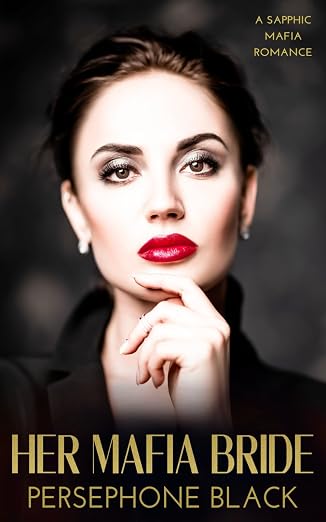
A forced-marriage sapphic mafia romance that delivers on the fantasy while engaging genuinely with the world it creates. The marriage-of-convenience dynamic in a lesbian context is still relatively rare and this book executes it with energy and commitment.
Tropes: Forced marriage · Sapphic mafia · Ice queen · Slow burn Heat level: Spicy Series: Part of Persephone Black’s wider Sapphic Mafia Universe
🌹 Spotlight: Matelda: In Silence We Forgive — The Sapphic Mafia Romance You Cannot Miss {#matelda}
If there is one sapphic mafia romance published in 2026 that deserves to be in the conversation about the genre’s finest achievements, it is Matelda: In Silence We Forgive by Jossef S.
And we say this not because it is new, or because it arrived with industry fanfare, but because it does something specific and rare: it understands that the heart of mafia romance — sapphic or otherwise — is never really the criminal empire. It is the silence between two people who cannot say what they feel, in a world that would punish them for feeling it.
What Matelda Is About
Set inside the enclosed, sun-drenched atmosphere of a villa where everyone is watching and no one is safe, Matelda follows Mia and Matelda — two women caught in the orbit of the criminal world, navigating an attraction that the rules of their world forbid and the logic of their hearts cannot contain.
The premise is deceptively simple. What Jossef S. builds on top of it is anything but.
From the first pages, the atmosphere is doing real work. This is a novel that understands setting not as backdrop but as pressure — the villa is not merely where the story happens, it is a force that acts upon the characters, narrowing their world, intensifying every interaction, making the space between them feel simultaneously infinite and impossibly small.
mafia romance book
Why Matelda Stands Apart
The silence is the point. The title announces it: In Silence We Forgive. Jossef S. understands that in the mafia world — and in the experience of two women who cannot openly desire each other — what is not said is as charged as what is. The novel is built on accumulation: glances, pauses, the texture of moments that carry more weight than their surface suggests. This is slow burn as literary technique, not just as romance trope.
Both women are genuinely formidable. This is not a story of a powerful woman and the civilian who softens her. Both Mia and Matelda operate with intelligence, with will, and with the specific kind of dangerousness that comes from having survived the world they inhabit. Watching two women this capable circle each other — each recognizing in the other both a threat and the only person she might trust — is the engine of the novel’s tension.
The love story is earned. Nothing in Matelda comes cheaply. The emotional distance between these two women at the novel’s opening is genuine — not manufactured for plot purposes, but rooted in who they each are and what they have each survived. The movement toward each other is slow, specific, and completely convincing. By the time the novel reaches its climax, the reader feels the full weight of what getting here has cost both of them.
The prose has atmosphere. Jossef S. writes with restraint and purpose — not flashy, not decorative, but precise in the way that matters. The sentences work. The descriptions land. The dialogue carries subtext without announcing it. This is a novel that respects its reader’s intelligence.
It announces a series worth following.Matelda: In Silence We Forgive is Book One of the Matelda Series — which means there is more to come. For readers who find themselves, as many will, deeply invested in these characters and this world, that is not a limitation. It is a promise.
Who Should Read Matelda
Read Matelda if you love slow-burn sapphic romance and want it in a dark, atmospheric, mafia-adjacent setting. Read it if you are tired of sapphic dark romance that confuses heat level with depth. Read it if you want a love story between two women who are genuinely complicated, genuinely dangerous, and genuinely in over their heads with each other.
Tropes: Sapphic mafia romance · Enemies to lovers · Slow burn · Forced proximity · Atmospheric thriller · Dark romance Heat level: High tension · Intense · Emotionally devastating Series: Book One of the Matelda Series Perfect for: Readers who want literary quality, genuine atmosphere, and a love story that earns every page
Mafia Romance vs Dark Romance: What’s the Difference? {#vs-dark-romance}
This is one of the most common questions new readers of the genre ask, and the answer matters because the two categories are related but not identical.
Dark romance is the broader category. It describes romance fiction that incorporates darker themes — moral ambiguity, power imbalance, non-consensual elements, psychological manipulation, violence, or other content that mainstream romance typically avoids. Dark romance can be set anywhere: a college campus, a billionaire’s penthouse, a fantasy kingdom, a dystopian future.
Mafia romance is a specific setting within dark romance. It places the love story inside the world of organized crime — with all the power dynamics, loyalty codes, violence, and moral complexity that implies. Not all mafia romance is dark romance (some is relatively light, with the criminal setting providing atmosphere rather than genuine menace), but most of it leans dark, and the best of it leans very dark indeed.
The most popular dark romance tropes include possessive or obsessive love interests, captivity and forced proximity, enemies to lovers with morally grey characters, and dark mafia or criminal underworld settings.
For sapphic readers, it is worth noting that sapphic mafia romance sits at a particularly interesting intersection: it takes the established dark romance vocabulary — developed almost entirely in a heterosexual context — and remakes it for f/f pairings in ways that often reveal new dimensions of those tropes that the original heterosexual versions had not explored.
The Best Mafia Romance Settings {#settings}
Where a mafia romance is set is never incidental. The setting shapes the power dynamics, the aesthetic, the specific texture of the danger. Here are the most compelling settings in the genre:
The Italian Mafia (Cosa Nostra)
The classic. Sicily, Naples, or the Italian-American underworld of New York and Chicago. Family dynasties, old codes of honor, and a world where tradition is both shield and cage. The Italian mafia setting carries enormous cultural weight and a rich tradition in both film and fiction — readers come to it with established expectations and deep appetite.
The Russian Bratva
Colder, harder, more modern than the Italian mafia aesthetic. Literary interpretations of Cosa Nostra and similar criminal organizations remain incredibly popular among readers worldwide. The Bratva setting — tattoos, vodka, brutal efficiency — has developed its own devoted readership and its own trope vocabulary, with a particular emphasis on ice-cold power and the specific vulnerability that thaws it.
The Cartel
Latin American cartel settings bring heat, passion, and a particular intensity of danger that the European crime family settings sometimes lack. The cartel romance tends toward higher heat levels and more overt violence, and its sapphic incarnation is an emerging and thrilling space.
The Mediterranean Villa / Closed Estate
This is the setting of Matelda — and it deserves its own category. The enclosed world of a villa, a compound, or a private estate creates the forced proximity and claustrophobic intensity of the best sapphic mafia romance. Everyone is watching. Every interaction is charged. The outside world seems very far away, and the walls of the estate become the walls of the story itself.
Contemporary Urban / Global Crime Networks
The most modern face of mafia romance: crime that operates across borders, through technology, in the grey spaces of legitimate business. This setting allows for more contemporary dynamics and a broader cast of characters, and it is where many of the most interesting new sapphic mafia romances are being set.
Content Warnings: What to Expect in Mafia Romance {#content-warnings}
Mafia romance, and particularly dark sapphic mafia romance, operates in territory that requires honest content labeling. Trigger warnings protect readers who may be genuinely harmed by certain content, and they also serve as helpful signals for readers actively seeking those elements. They should be included in the book description and at the front of the book itself.
Common content warnings in mafia romance and dark sapphic mafia romance include:
Violence and threat of violence — The mafia world is a violent world. Most mafia romance depicts or implies violence as part of the setting, ranging from implied background violence to explicit scenes. Know your comfort level before you begin.
Morally grey characters — Mafia romance leads do not have clean hands. They have given orders, protected their world through means that would not survive ethical scrutiny. If you require morally upright protagonists, mafia romance is not your genre.
Power imbalance — Almost definitionally present in mafia romance. The nature and dynamics of the power imbalance vary widely across the subgenre.
Dubious consent — Present in some dark mafia romance but not universal. Always check reviews and trigger warnings for specific books.
Forced proximity / captivity — A common trope, ranging from “protective custody” at the lighter end to explicit captivity at the darker end.
Cliffhangers — Many mafia romances are series, and not all books resolve their central conflicts by the final page. Check whether a book is a standalone before you begin if open endings distress you.
The sapphic mafia romances we feature on this site are clearly labeled for content. We believe readers deserve complete information.
FAQ: Everything You Need to Know About Mafia Romance {#faq}
What is mafia romance? Mafia romance is a dark romance subgenre set in the world of organized crime, defined by power dynamics, forbidden love, morally complex characters, and high-stakes emotional tension. It places a love story at the center of the criminal underworld, where love is both the most dangerous and the most meaningful thing a character can experience.
What is sapphic mafia romance? Sapphic mafia romance applies the tropes and atmosphere of mafia romance to female-female (f/f) pairings. It is one of the fastest-growing subgenres in lesbian fiction, combining the emotional architecture of sapphic romance with the intensity and moral complexity of the criminal underworld.
Is mafia romance the same as dark romance? Not exactly. Dark romance is the broader category — any romance with dark themes, moral ambiguity, or content outside mainstream romance norms. Mafia romance is a specific setting within dark romance, defined by the organized crime world. Most mafia romance is dark romance, but not all dark romance is mafia romance.
What are the most popular mafia romance tropes? The most beloved mafia romance tropes include forced marriage or arranged alliance, enemies to lovers, forced proximity and captivity, the ice queen or untouchable boss, bodyguard romance, hidden identity, and the possessive/obsessive lead. In sapphic mafia romance, these tropes take on new dimensions when both characters are women.
Where can I find sapphic mafia romance books? Amazon’s Lesbian Romance — Criminals & Outlaws category is the best starting point. Goodreads lists for “WLW dark romance” and “sapphic mafia” are also excellent resources. And of course, this blog — LesbianRomanceReads.com — features regular reviews, recommendations, and spotlights specifically on sapphic romance including the mafia subgenre.
What is the best sapphic mafia romance to start with? For readers new to the subgenre: Dangerous Game by Bel Blackwood is an accessible entry point. For readers ready for something more atmospheric and literarily ambitious: Matelda: In Silence We Forgive by Jossef S. is essential reading. For readers who want the full possessive-boss experience: Persephone Black’s Underworld Duet is the subgenre’s most established series.
Does sapphic mafia romance always have explicit content? No. Heat levels across the subgenre vary widely, from high heat explicit content to slow-burn stories where the tension is primarily emotional. Matelda prioritizes atmospheric intensity and emotional stakes over explicit scenes, while other titles in the genre are significantly more explicit. Always check content labels and reviews before reading.
Why is mafia romance so popular right now? The enduring appeal of mafia romance lies in its ability to offer a mix of intense emotions, high-stakes drama, and complex characters. Its focus on psychological complexity and moral ambiguity continues to deepen, offering readers more anti-heroes and morally grey protagonists who challenge their perceptions of right and wrong. For sapphic readers specifically, the appeal is amplified by the genre’s relative novelty — there are still relatively few sapphic mafia romances, which means each new quality entry feels like a discovery.
Are there sapphic mafia romance series? Yes. Persephone Black has built an entire Sapphic Mafia Universe across multiple duets and series. The Matelda Series by Jossef S. is an ongoing series beginning with In Silence We Forgive. The subgenre increasingly supports serialized storytelling, which allows for the world-building and relationship development that the best mafia romance requires.
Why Sapphic Mafia Romance Matters
There is a conversation happening in the sapphic romance community about the limits of the genre — about whether lesbian fiction is allowed to be dark, whether WLW characters are permitted to be morally complex, whether sapphic love stories must always be tender and sunlit to count as valid representation.
We believe the answer is no. We believe that sapphic love stories should be permitted to be everything love stories have always been: dark and light, tender and brutal, slow and explosive, complicated and clear. The full range of human emotional experience belongs to sapphic characters as much as to anyone else.
Sapphic mafia romance is not a guilty pleasure. It is a legitimate and thriving corner of lesbian fiction that deserves exactly the same critical attention and reader devotion that the broader mafia romance genre receives. Two women in the criminal underworld, finding each other across every code that says they shouldn’t — that is not a lesser story. In many ways, it is a more interesting one.
Matelda: In Silence We Forgive is a proof of that. Read it.
This post is part of our ongoing commitment to covering every corner of sapphic romance — including the darkest and most thrilling ones. Browse our full collection of reviews, recommendations, and essays at LesbianRomanceReads.com — and if you are a writer, reviewer, or passionate reader with something to say about the sapphic romance genre, we want to hear from you.
LesbianRomanceReads.com — your guide to lesbian romance. Books, tropes, and the joy of sapphic storytelling.
SEO Tags: mafia romance · sapphic mafia romance · lesbian mafia romance · dark romance · WLW dark romance · best mafia romance books · sapphic dark romance · lesbian dark romance · mafia romance books 2026 · what is mafia romance · mafia romance tropes · f/f mafia romance · enemies to lovers lesbian · dark sapphic fiction · Matelda Jossef S · lesbian romance books · best WLW dark romance · sapphic organized crime romance
Schema FAQ Keywords: what is mafia romance · sapphic mafia romance books · mafia romance vs dark romance · best lesbian mafia romance · mafia romance tropes explained · is mafia romance dark romance · sapphic dark romance recommendations 2026


 The Fiancée Farce doesn’t waste time getting Tansy and Gemma into a room together, and that choice pays off: the chemistry is immediate, playful, and rooted in real curiosity rather than manufactured tension.
 Who’d Have Thought’s greatest strength is patience. Benson refuses to rush Sam and Hayden’s relationship, letting genuine dislike curdle into grudging respect and then into something neither woman is prepared for, long before anything resembling romance appears on the page.

 Breaking Character’s greatest strength is its dialogue. Winter writes banter that lands somewhere between combative and flirtatious long before either woman admits what’s happening, and both leads are given distinct, fully realized inner lives rather than one being a simple foil for the other.
 Cochrun’s biggest strength here is voice and supporting cast. Ellie’s anxious, self-deprecating narration is drawn with real specificity, particularly in how it captures social anxiety, and her scenes with Andrew crackle with an easy, low-stakes friendship that is often funnier than the central romance. Reader consensus consistently singles out the extended family, the bickering grandmothers, and Andrew himself as the book’s most purely enjoyable elements.

 Casting Lacey’s biggest strength is its dialogue. Spencer writes banter that actually sounds like two quick, defensive people sparring rather than the more common romance-novel version of “witty” back-and-forth, and that voice carries the first half of the book almost entirely on its own. Quinn and Lacey are drawn with real specificity, an ice-queen control freak and a mouthy, self-protective sarcasm machine, and watching those particular defenses fail against each other is more satisfying than a lot of enemies-to-lovers setups manage, even though this is closer to rivals-to-reluctant-allies than true enemies.